Disclosure Foundation

UAP Science Advisory Council · September 29, 2026

National security information and the PURSUE Initiative

A briefing presented by Chief Legal Officer Hunt Willis and other Disclosure Foundation representatives to the UAP Science Advisory Council.

The views expressed in this presentation do not necessarily reflect those of any institution or person. Nothing contained in this presentation constitutes legal advice or is intended to form an attorney-client relationship.

Contents

Roadmap

  1. 01
    Overview: national security and separation of powers
  2. 02
    The government's secrecy architecture
  3. 03
    Disclosures to AARO
  4. 04
    Disclosures to the PURSUE Initiative
  5. 05
    Disclosures to Congress
  6. 06
    Conclusion
01

Separation of powers

01 · National security and separation of powersSlide 03 ↗

Three branches minus one equals confusion

Under the Constitution, the federal government comprises three branches:
  • Legislative branch (Congress)
  • Executive branch (President)
  • Judicial branch (Supreme Court)
The legislative and executive branches are the "political branches".
The judicial branch resolves disputes between the political branches.
But the federal courts intentionally leave some disputes unresolved.
  • This doctrine of avoidance is notable in national security.
  • It is intended to promote flexibility, cooperation, and productive rivalry between the political branches.
  • Often it just confuses everyone.
Seal of the United States Congress
Seal of the President of the United States
Seal of the Supreme Court of the United States
01 · National security and separation of powersSlide 04 ↗

The constitutional scheme differs from reality after World War II

Congress and the President both have constitutional national security powers.
Congress
  • Power to provide for the common defense. U.S. Const. art. 1 § 8.
  • Power of the purse. U.S. Const. art. 1 § 9.
  • The only branch the Constitution expressly recognizes as a classification authority: "Each House shall keep a Journal of its Proceedings, and from time to time publish the same, excepting . . . as may in their Judgment require Secrecy." U.S. Const. art. 1 § 5.
President
  • Commander in Chief. U.S. Const. art. 2 § 2.
  • Shall "take Care that the Laws be faithfully executed." U.S. Const. art. 2 § 3.
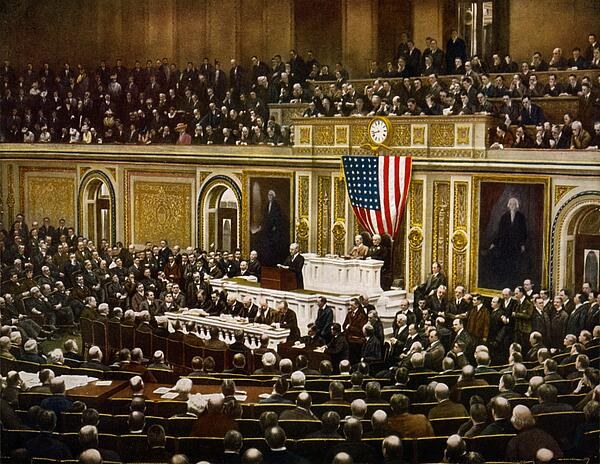
The President addressing a joint session of Congress
01 · National security and separation of powersSlide 05 ↗

The modern presidency:
Justice Jackson's three-part framework

The two branches cooperate when Congress passes a bill the President signs. That is a statute, which is binding law.
"When the President acts pursuant to an express or implied authorization of Congress, his authority is at its maximum." Youngstown Sheet & Tube Co. v. Sawyer, 343 U.S. 579, 635 (1952).
An active branch can displace an inactive one.
"When the President acts in absence of either a congressional grant or denial of authority, he can only rely upon his own independent powers, but there is a zone of twilight in which he and Congress may have concurrent authority." Id.
They compete when each branch invokes its powers against the other.
"When the President takes measures incompatible with the expressed or implied will of Congress, his power is at its lowest ebb." Id.
The Pittsburgh Press front page: U.S. takes over steel mills
The Pittsburgh PressFront-page excerpt.
02

Secrecy architecture

02 · The government's secrecy architectureSlide 06 ↗

The National Security Act:
Congress and the President cooperate on classifying information
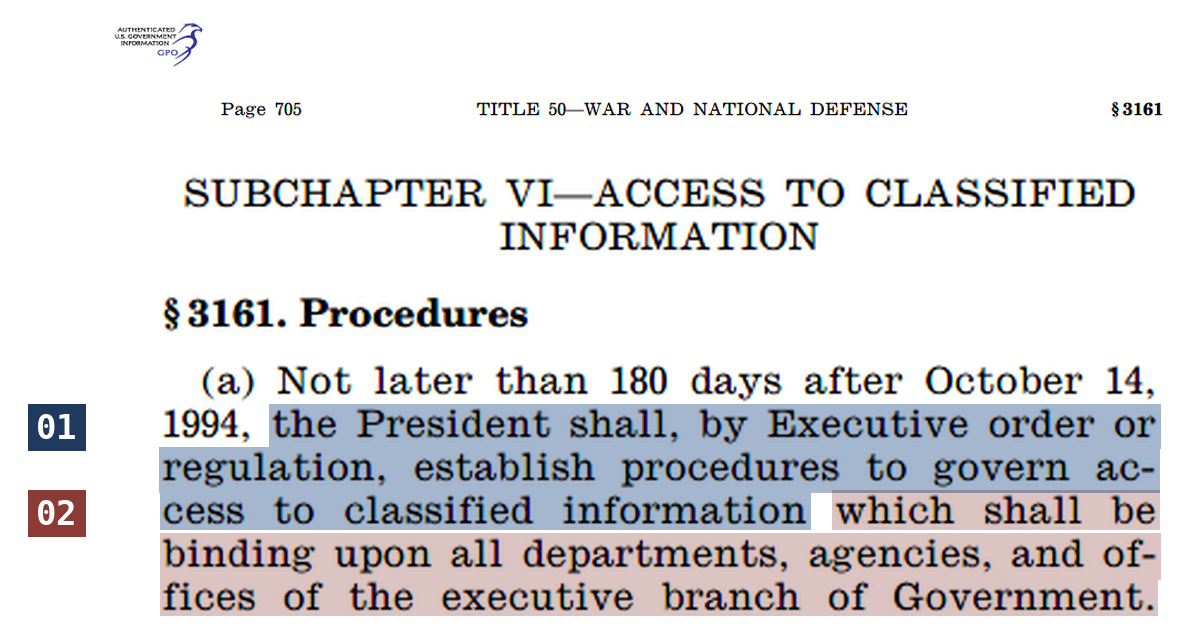
Here is a statute, binding law:  50 U.S.C. § 3161(a) - Security Act of 1947 (as amended).
50 U.S.C. 3161(a), Procedures: text of the statute
Office of the Law Revision Counsel, U.S. House of Representatives · U.S. Code, § 3161Excerpt; highlighting and numbered annotations appear in the supplied presentation.
01
"the President shall, by Executive order or regulation, establish procedures to govern access to classified information"
02
"which shall be binding upon all departments, agencies, and offices of the executive branch of Government"
Key
Authority
Discloser
02 · The government's secrecy architectureSlide 07 ↗

That cooperation is confined

01 "[T]he President shall, by executive order or regulation, establish procedures to govern access to classified information."
  • Congress and the President cooperated by enacting a statute that delegates specific authority to the President.
  • The President promulgated various orders, including Executive Order 13526 (2009), which prescribes a system for (a) classifying, (b) safeguarding, and (c) declassifying information; authorizes special access programs; and further delegates authority to other officials.
02 "Which shall be binding upon . . . the executive branch."
  • Under Jackson's framework, the President's power to classify information is at its maximum due to statute, but generally confined to the executive branch.
  • This is the most frequently misunderstood concept.

Executive orders in folders on the Resolute Desk
© 2025 The Washington Post · Image published by Harvard Kennedy School
Key
Authority
Discloser
02 · The government's secrecy architectureSlide 08 ↗

Information "classified" by the executive branch and "national defense information" under statute

The President's decisions over classified information are generally not binding on Congress or the courts.
  • Leaking information the executive branch determines is "classified" is not a crime.*
Congress and the President cooperated to enact another statute, the Espionage Act of 1917 (as amended), which criminalizes improper handling and transfer of "information respecting the national defense" ("NDI").
  • NDI often overlaps with what the executive branch determines is "classified."
  • But a jury determines NDI. Gorin v. United States, 312 U.S. 19 (1941).
Why?
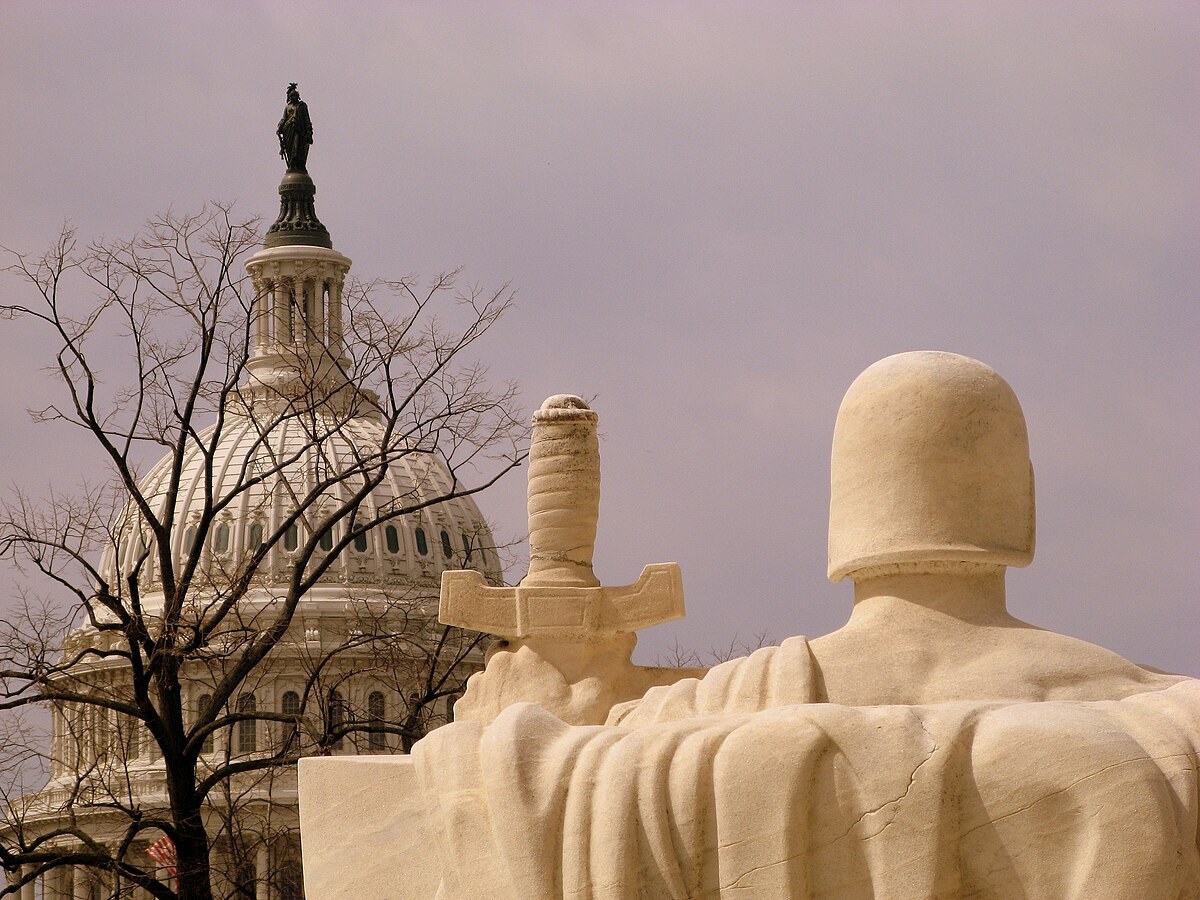
Statue outside the Supreme Court with the Capitol dome behind
debaird, “checks and balances” · Wikimedia Commons · CC BY-SA 2.0
* But see 18 U.S.C. § 798(c).
02 · The government's secrecy architectureSlide 09 ↗

Prosecution:
three branches minus none

So the President cannot, by classifying information, send someone to prison.
Thought experiment
If the President classified the White House lasagna recipe, does the chef commit a felony under the Espionage Act by selling it to North Korea?
A jury in court proceedings independently determines whether that information is NDI. The Atomic Energy Act of 1954, a statute not considered here, presents different, although generally analogous, issues.
Classified
The executive branch decides
NDI
A jury decides
Classified, but might not be NDI
e.g., the lasagna recipe
Often both
NDI that in theory might not be classified
e.g., the info in Gorin
02 · The government's secrecy architectureSlide 10 ↗

Disciplinary action:
executive orders from the boss at work

Nevertheless, the President's classification decisions are "binding . . . upon the executive branch."
  • They are "orders from the boss at work."
  • When those orders are disobeyed, the boss's remedy is disciplinary: firing, demotion, clearance-stripping.
  • Revocations of clearance have limited appeals in administrative proceedings.
  • The Justice Department separately can prosecute under the Espionage Act to the extent NDI is implicated.
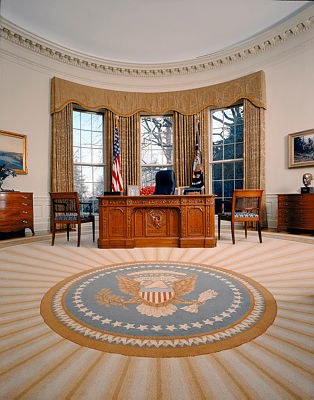
The Oval Office
02 · The government's secrecy architectureSlide 11 ↗

NDAs with agencies and government contractors

Employees and contractors of the executive branch might also sign confidentiality, or non-disclosure, agreements ("NDAs").
  • NDAs are voluntary contracts.
  • NDAs only bind persons party to them. T can't waive a contract between A and B.
  • You can't go to prison for violating a contract.
  • An NDA entitles the non-violating party to court enforcement for (a) money and/or (b) an "injunction," a court order to make someone do or stop doing something.
You can't "contract to a crime":
  • No one can lawfully contract to murder, steal, embezzle, or misappropriate funds directed by Congress.
  • An NDA that says otherwise is unenforceable.

Header of a Special Access Program Indoctrination Agreement form
U.S. Department of Defense, Washington Headquarters Services · DD Form 2836Header excerpt from the Special Access Program Indoctrination Agreement.
SF 312 Classified Information Nondisclosure Agreement title card
02 · The government's secrecy architecture · RecapSlide 12 ↗

Recap:
the parade of four horribles

01 · Administrative law
Classification
The President is granted broad discretion by the National Security Act and other statutes to determine who can access or control classified information.
Administrative appeals processes implement determinations and resolve interagency disputes.
02 · Criminal law
Prosecution
The Espionage Act and related statutes.
People go to prison all the time for transmitting NDI to reporters and foreign powers.
No one has ever gone to prison or faced prosecution for sharing NDI with Congress.
Members of Congress and their staffs have constitutional immunity for "legislative acts," e.g., Floor and committee statements. U.S. Const. art. 1 § 6.
03 · Employment law
Discipline
Orders and regulations in the executive branch.
This happens.
Rare for disclosures to Congress, even where the executive branch learns of them.
04 · Civil law
Contract
Money damages and injunction.
Contracts for crimes like murder or misappropriation of congressional funds are unenforceable.
The government's own NDAs expressly preserve the right of Congress to information.
03

Disclosures to AARO

03 · Disclosures to AAROSlide 13 ↗

Congress and the President cooperate on limited UAP disclosure
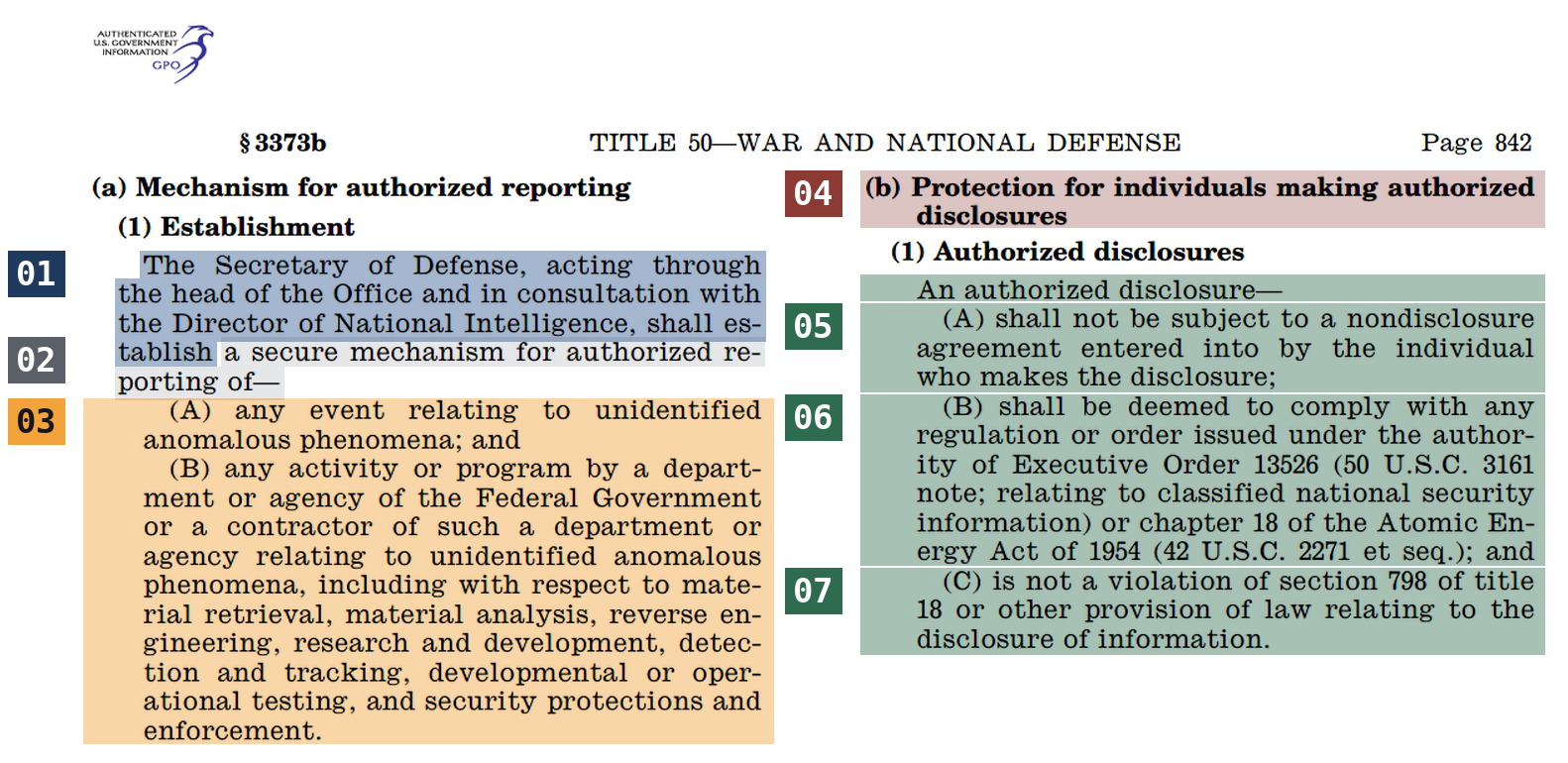
Here is another statute, binding law, which governs the All-domain Anomaly Resolution Office ("AARO"):
50 U.S.C. 3373b(a) Mechanism for authorized reporting and (b) Protection for individuals making authorized disclosures
Office of the Law Revision Counsel, U.S. House of Representatives · U.S. Code, § 3373bExcerpt; highlighting appears in the supplied presentation.
01
(a)(1) Congress and the President agree to the mechanism.
02
(a)(1) Establishes receiving mechanism.
03
(a)(1)(A)–(B) Broad definition of UAP events and activities.
04
(b) Any individual may disclose.
05
(b)(1)(A) Contract. Overrides any NDA.
06
(b)(1)(B) Classification. Overrides all information restrictions.*
07
(b)(1)(C) Prosecution. Overrides the Espionage Act and any other secrecy law.
Source: 50 U.S.C. § 3373b · * Exception noted in the summary that follows
Key
Authority
Discloser
Disclosed Info
Recipient
Relief
03 · Disclosures to AAROSlide 14 ↗

Congress and the President cooperate on limited UAP disclosure, and oversight
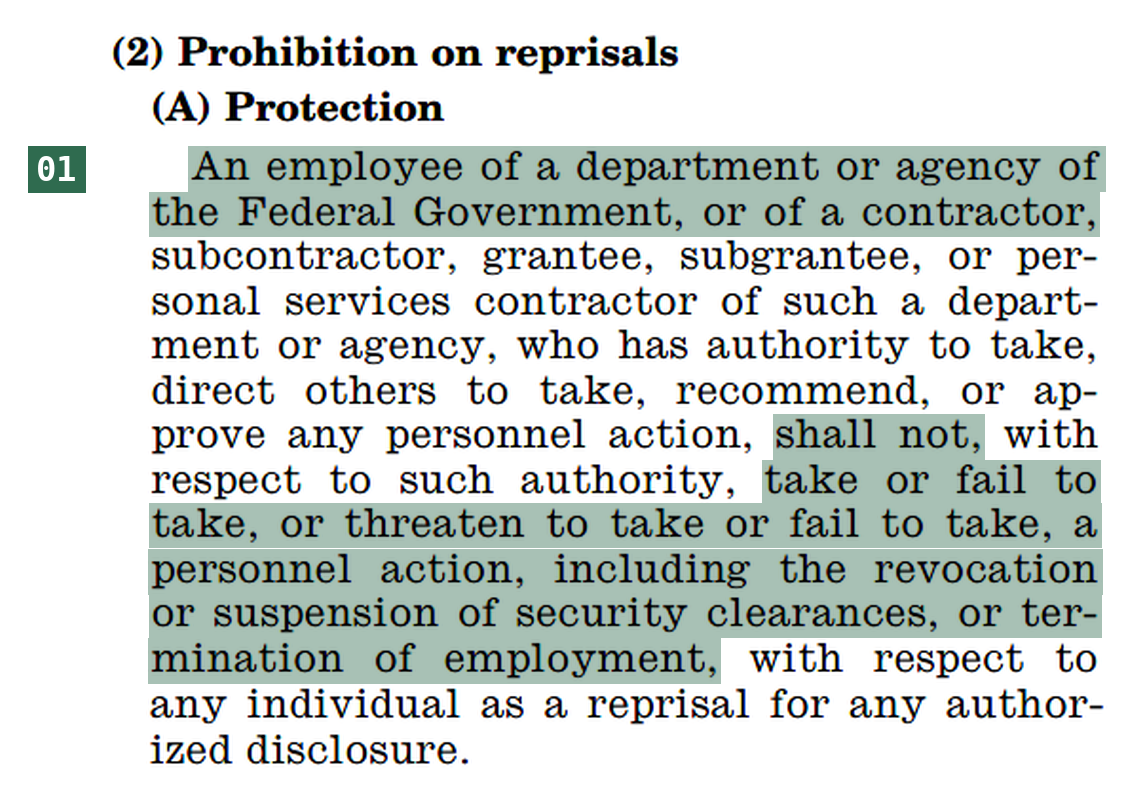
This statute also prohibits any disciplinary retaliation by the U.S. government or a contractor for making disclosures to AARO:
50 U.S.C. 3373b, Prohibition on reprisals, (A) Protection: text of the statute
Office of the Law Revision Counsel, U.S. House of Representatives · U.S. Code, § 3373bExcerpt; highlighting appears in the supplied presentation.
01
RELIEF
Prohibits any retaliation by government or contractor.
Source: 50 U.S.C. § 3373b · Prohibition on reprisals
Key
Authority
Discloser
Disclosed Info
Recipient
Relief
03 · Disclosures to AAROSlide 15 ↗

The statute covers the four horribles, at least on paper

In summary, Congress and the President made binding law to:
  • Define UAP events and activities broadly.
  • Cover the entire federal government and federal contractors.
  • Limit federal government and contractor authority to:
Limits on authority
Classify information beyond AARO, with a potentially major exception.*
Prosecute individuals for disclosures to AARO.
Enforce NDAs to which the executive branch is party.
Take disciplinary actions or retaliate for authorized disclosures.
* Other than any special or compartmented access program fully briefed to applicable congressional authorities. 50 U.S.C. § 3373b(4)(A).
03 · Disclosures to AAROSlide 16 ↗

The law is not perfect, and implementation by AARO raises questions
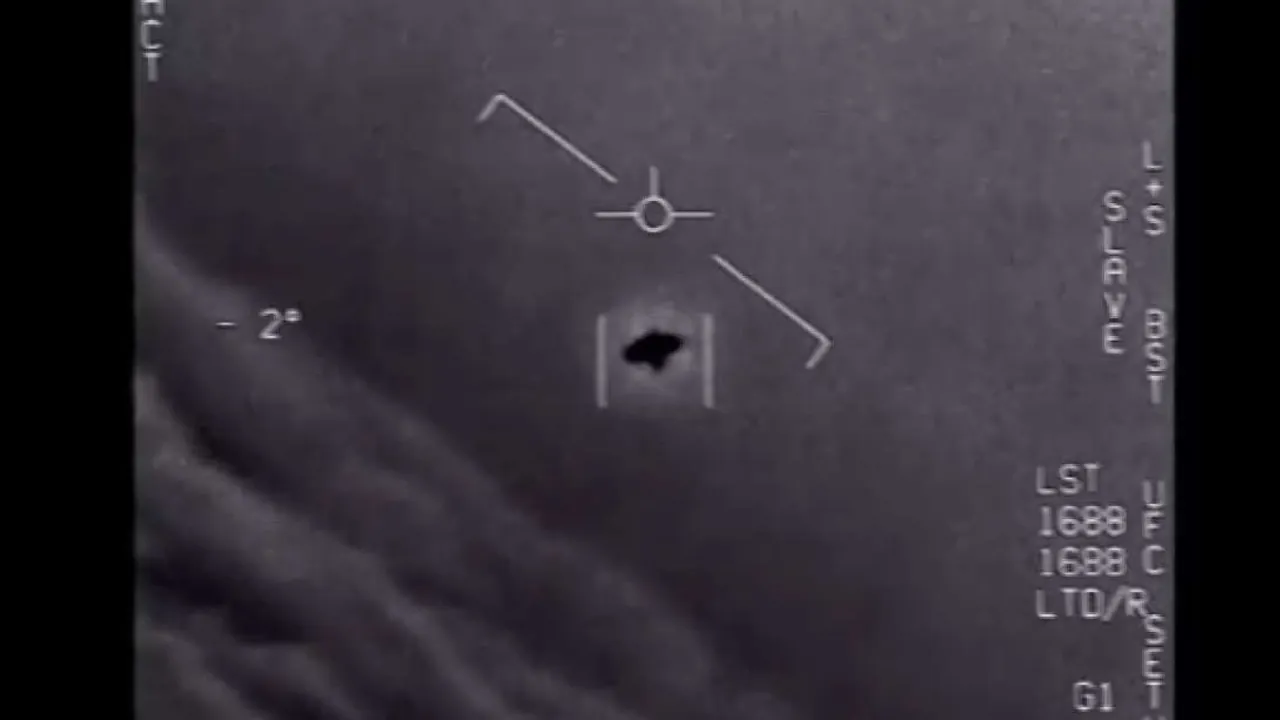
It is not clear the Presidential Unsealing and Reporting System for UAP Encounters ("PURSUE") Initiative knows the extent of its authority and obligations.
AARO, individuals before AARO, and the public are often unaware of the law's existence and breadth.
Infrared sensor still of an unidentified object
U.S. Navy · GIMBAL, NAVAIR FOIA reading room
04

Disclosures to PURSUE

04 · Disclosures to the PURSUE InitiativeSlide 17 ↗

PURSUE & the Pentagon directive for limited disclosure
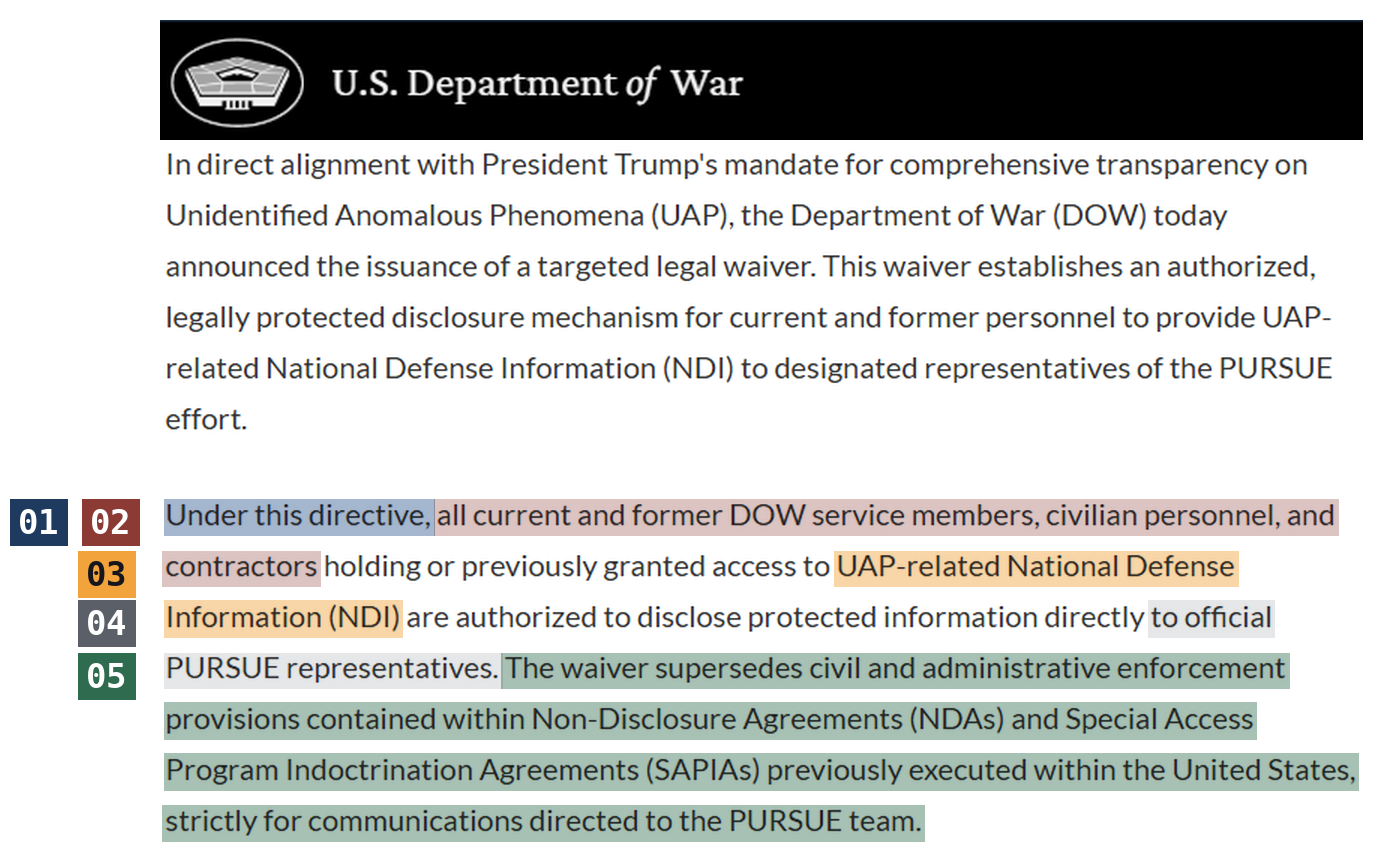
On September 14, 2026, the Pentagon issued the following legal waiver:
U.S. Department of War announcement of a targeted legal waiver for disclosures to PURSUE representatives
U.S. Department of War · September 14, 2026 releaseScreenshot excerpt; highlighting appears in the supplied presentation.
01
Agency directive by the Pentagon.
02
Applies to three categories of persons.
03
Purports to apply to NDI.
04
Designates a channel.
05
Applies to those NDAs the Department can waive.
Source: U.S. Department of War · September 14, 2026
Key
Authority
Discloser
Disclosed Info
Recipient
Relief
04 · Disclosures to the PURSUE InitiativeSlide 18 ↗

Comparison of disclosures to AARO and PURSUE

Element
AARO · 50 U.S.C. § 3373b
PURSUE Initiative
Authority
Statute
War Department directive
Discloser
Any individual
Current or former War Department service members, civilian personnel, and contractors
Disclosed information
All UAP-related information of any event, activity, or program by the U.S. government or any contractor
Purportedly, UAP-related NDI capable of waiver by the War Department · Does not purport to affect other agencies · Purports to cover NDAs solely between Pentagon contractors and their employers
Recipient
AARO
To-be-designated PURSUE representatives
Relief
Prosecution by U.S. government · Disciplinary action by government or contractor · Civil suit by anyone
According to the War Department, civil suit or administrative action under an NDA executed in the U.S. · Silent as to prosecution (determined by Justice Department) · Silent as to disciplinary action
Key
Authority
Discloser
Disclosed Info
Recipient
Relief
04 · Disclosures to the PURSUE InitiativeSlide 19 ↗

Political effects versus legal consequences of PURSUE

Politically
Signals transparency and a step forward.
Legally
Creates confusion and potential mistrust.
Legally: disclosures to PURSUE are narrower than to AARO
What if a non-Pentagon employee discloses to PURSUE instead of AARO?
How can the Pentagon, by directive, waive an NDA it is not party to? Possible if NDAs incorporate agency guidance.
  • What if a person with an NDA with a Pentagon contractor discloses to PURSUE?
  • What if an employee of a contractor other than to the Pentagon discloses to PURSUE?
Can AARO share with PURSUE disclosures made to AARO?
The directive purports to govern NDI. But a jury determines NDI. Gorin, 312 U.S. at 31-2.
04 · Disclosures to the PURSUE InitiativeSlide 20 ↗

A simple fix

Proposed language

"In consultation with the Director of National Intelligence, the Secretary of War hereby establishes the PURSUE Initiative as a secure mechanism for reporting under 50 U.S.C. § 3373b. Representatives of the PURSUE Initiative are as follows . . . ."
05

Disclosures to Congress

05 · Disclosures to CongressSlide 21 ↗

Why is UAP disclosure so unlike any other classified disclosure to Congress?
Whistleblowers and other potential sources of alleged UAP information have stated that they will not provide classified information to Congress behind closed doors, citing fears that include:
01 Prosecution (criminal law)
02 Contract (civil law)
03 Discipline (employment law)
04 Physical harm (illegal)
This dissuades other sources from coming forward, perversely chilling the very disclosure these sources state should occur.
These statements misunderstand laws affecting national security information.
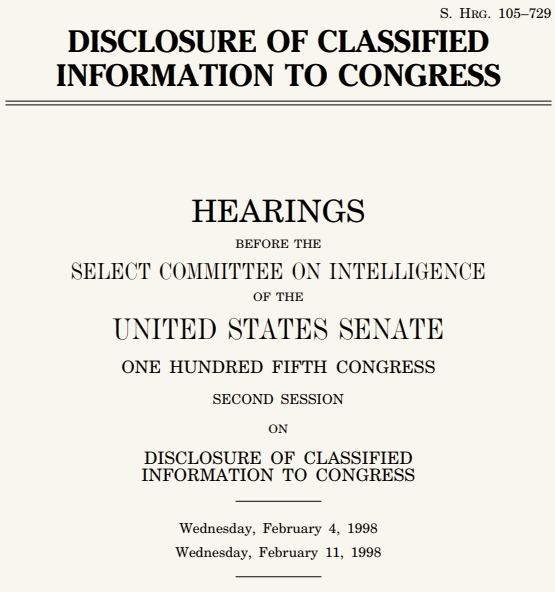
Cover of the 1998 Senate Select Committee on Intelligence hearing record, Disclosure of Classified Information to Congress
U.S. Senate / U.S. Government Printing Office · S. Hrg. 105-729 (1998), GovInfo
05 · Disclosures to Congress · The horribles come callingSlide 22 ↗

01 · Prosecution

Executive branch classified information determinations are generally not binding on Congress or the courts.
The courts have never convicted someone under the Espionage Act or other U.S. law for providing classified information behind closed doors to Members of Congress.
The Justice Department has never charged someone for providing classified information to Congress.
  • The Department occasionally claims that statutes regulating the flow of classified information to Congress are unconstitutional. See, e.g., Access to Classified Info., Memorandum from Acting Assistant Att'y Gen. to Gen. Counsel, Cntr'l Intel. Agency (1996).
The Intelligence Community Whistleblower Protection Act ("ICWPA") and reporting requirements like 10 U.S.C. § 119 set a floor, not a ceiling, on disclosures to Congress.
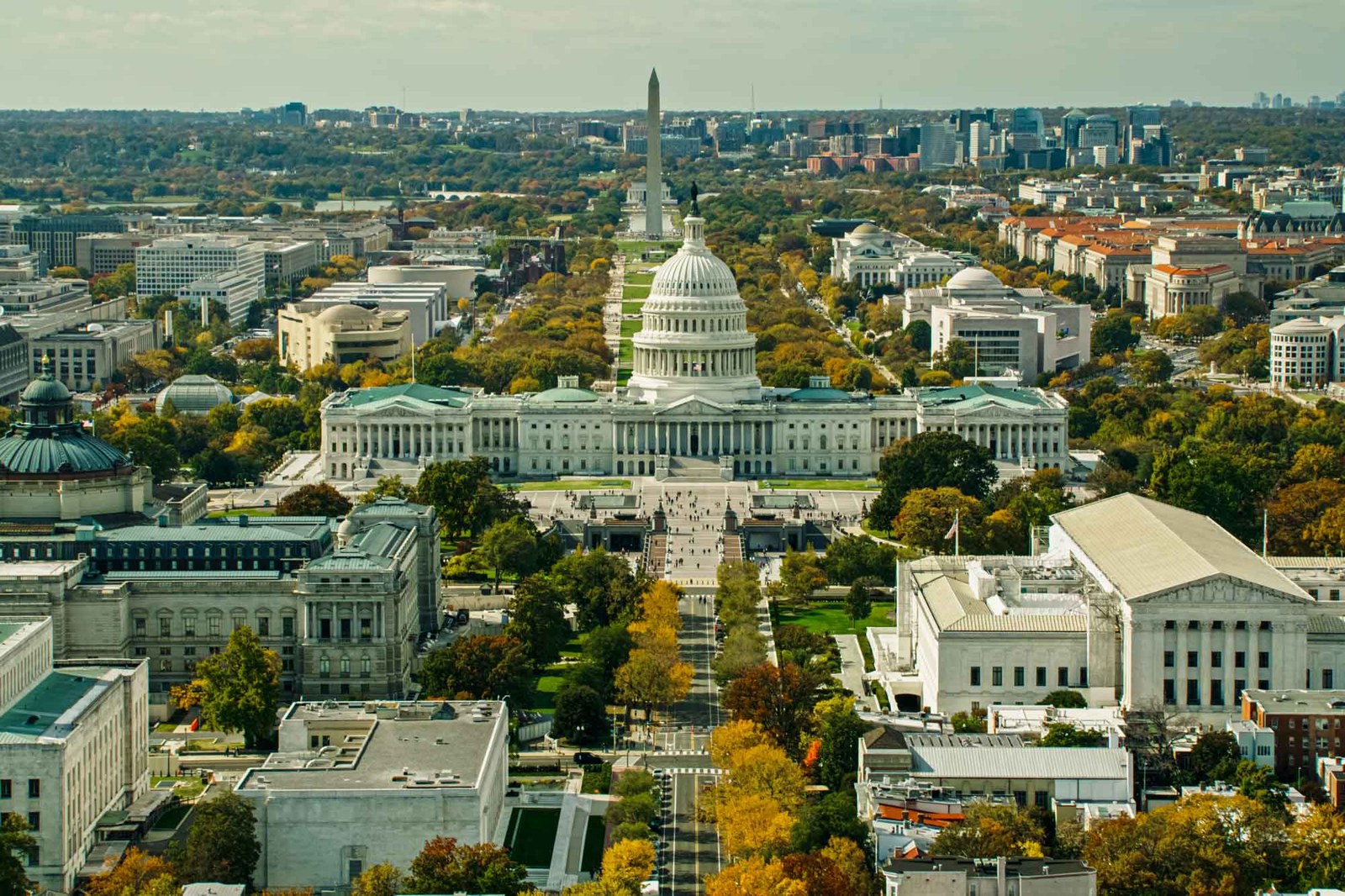
Aerial view of the U.S. Capitol, Supreme Court, Library of Congress, and the National Mall
05 · Disclosures to Congress · The horribles come callingSlide 23 ↗

02 · Contract

Aerial view of a hedge maze
Grand Voyage ItalyPhotographer not identified by the linked publication.
No court has ever held an NDA prevents sharing classified information or NDI with Congress.
Government NDAs expressly incorporate Congress's information rights, whatever they are:
"These provisions . . . do not supersede . . . obligations, [or] rights . . . relating to . . . communications with Congress," nor "supersede . . . Section 7211 of Title 5, United States Code (permitting disclosures to Congress)." Form of Classified Information Nondisclosure Agreement, Standard Form 312 (2023).
"These restrictions . . . do not supersede . . . Section 7211 of Title 5, United States Code (permitting disclosures to Congress)." Form of Special Access Program Indoctrination Agreement (2020).
05 · Disclosures to Congress · The horribles come callingSlide 24 ↗

03 · Employment retaliation

Retaliation remains possible for disclosures to Congress outside the procedures of the ICWPA.
  • UAP whistleblowers have alleged retaliation even after following the ICWPA.
  • Retaliation has happened before in non-UAP contexts.

Congress has limited ability to prevent or undo the executive branch's "orders from the boss at work."
Committees and members are generally good at keeping confidences, but exceptions overwhelm reality given the stakes.
At the same time, it is difficult for Members to act on information without outing the source. Burning one source means no more sources.
Gold profile blowing a whistle among blue silhouettes.
Lightspring / Shutterstock · Original illustration, asset 2499685319
05 · Disclosures to CongressSlide 25 ↗

Jackson's "zone of twilight" equals a zone of silence by the courts, and hence opportunity

Does Congress itself have a right to access classified information held by the executive branch? Or does the executive branch have a right to keep it?
  • Federal courts have avoided deciding the question.
  • It involves esoteric legal theories.
Possession is 9/10 of the law: whichever branch "gets," or gets to keep, the information wins, because a court is unlikely to act.
When courts intervene, they urge the branches to pursue "accommodation." United States v. AT&T, 567 F.2d 121, 127, 130 (1977). How accommodation in the AT&T cases played out: 
i
House commerce subcommittee subpoenaed a telecom  company for warrantless wiretaps.
ii
Subpoena sought "request letters" by the FBI to the company to conduct taps.
iii
DOJ intervened to quash.
iv
Subpoena withered pending "accommodation."
It can be counterproductive for an "outside" committee to subpoena the executive branch without a clear strategy.
05 · Disclosures to CongressSlide 26 ↗

Congressional path for (mostly) protected public disclosure

If any Member of Congress gets the information, lawful public disclosure is possible.
The source
No person has ever been prosecuted or sued for providing classified information to any Member or committee of Congress in private, in contrast to telling a newspaper.
  • Disciplinary action remains possible if the source is unmasked.
Members and staff
Members of Congress and their staffs have constitutional immunity for "legislative acts," e.g., Floor and committee statements and presentations. U.S. Const. art. 1 § 6; Gravel v. United States, 408 U.S. 606 (1972).
  • Members also face possible disciplinary action from their caucus, e.g., loss of committee assignments or expulsion.
  • Neither has ever happened for accidental or intentional disclosures.
Clearances
Members don't have executive branch security clearances. Why not?
Congress asserts a right to all information. A clearance is viewed as a limitation.
One difficulty is lack of understanding:
  • The executive branch repeats its view on national security powers so often that everyone believes it.
  • The media benefits by focusing attention on prosecutions for leaks to the press. 
06

Conclusion

06 · ConclusionSlide 27 ↗

Conclusion

•
When it comes to national security, branches of government behave more like different governments.
•
Statutes demonstrate agreement between Congress and the President to either expand or limit legislative and executive power.
•
AARO's statute is both higher authority and broader than the Pentagon-only PURSUE directive.
•
UAP whistleblowers and other insiders are skeptical of both AARO and PURSUE.
•
At the same time, they won't share classified information with Congress.
•
Concerns around disciplinary action, clearance, and livelihood are warranted, but the stakes around prosecution and NDAs or lawsuits are different from the public narrative.
•
A path for lawful public disclosure through Congress exists, and it doesn't require a majority to pass a bill.
Image and document credits

Sources are linked where identified. A source credit does not grant permission to reuse an image. These credits apply to the web edition; the original presentation is unchanged.