
Video
WFSB Interview: Disclosure Foundation Testifies in Support of Connecticut UAP Legislation
March 23, 2026
Advisory Board member Marc Vigliotti joins WFSB to discuss the Disclosure Foundation's testimony supporting Raised Bill No. 5422 and the case for state-level UAP research in Connecticut.
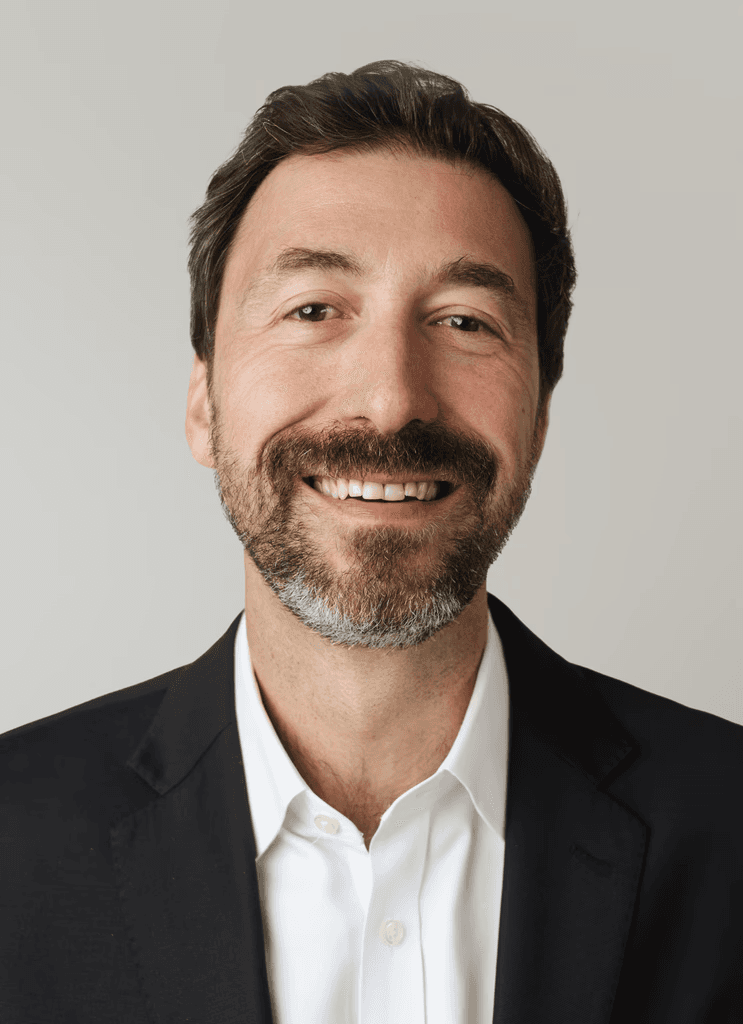
Marc Vigliotti
Advisory Board Member
Advisory Board member Marc Vigliotti appeared on WFSB's Sunday Spotlight alongside Shri Thanedar, a graduate officer of the Yale Student UFO Society, to discuss the Disclosure Foundation's testimony supporting Connecticut's Raised Bill No. 5422 — legislation that would authorize a state study of Unidentified Anomalous Phenomena (UAP) through the University of Connecticut.
National Security and Economic Opportunity
Vigliotti emphasized that Connecticut's dense concentration of defense and aerospace assets — including Sikorsky/Lockheed Martin in Stratford and General Dynamics Electric Boat in Groton — makes the state uniquely positioned to take UAP seriously as a national security matter.
"This is a national security issue," Vigliotti said. "We have unidentified phenomena that are invading our airspace. From a national security standpoint, we need to protect our citizens and the men and women that serve our country. And what are the research implications? How can citizens of Connecticut capitalize on that and be the recipient of investment dollars to grow our defense industry and to grow jobs in the state?"
Shifting the Conversation
The interview highlighted how dramatically the public conversation around UAP has shifted since the landmark 2017 New York Times article "Glowing Auras and Black Money." Vigliotti pointed to the bipartisan seriousness now surrounding the topic: "We have the president of the United States talking about this subject. There was a documentary that came out just a couple of months ago that featured 35 members of Congress all the way up to the Secretary of State."
Thanedar discussed the momentum building at the academic level, noting that while professional and reputational concerns still create hesitancy, a growing number of professors and researchers are privately interested in participating in structured UAP research.
Building on Regional Momentum
Both guests referenced New Jersey's recent $2.5 million appropriation to establish a university-based UAP research center as a model that Connecticut can build upon. Thanedar noted that the drone incursions of late 2024 — which affected the broader Northeast region, including Connecticut — provide additional motivation for state-level coordination.
"What we're trying to do is just set up a place where we can have scientific study of these things and coordinate with state agencies and different stakeholders within the state," Thanedar explained.
Foundation Recommendations
Vigliotti outlined the Disclosure Foundation's additional recommendations beyond the current bill text:
- A dedicated center to collect UAP data on an ongoing basis
- Mandatory reporting for personnel at military installations, nuclear facilities, and air traffic control
- Cross-state data sharing with New Jersey, Pennsylvania, and Vermont
- Public reporting on an annualized basis
"Right now, the bill is a little retrospective in that it will look at data that's been previously collected," Vigliotti said. "We'd like it to also collect data on a regular basis."
Bipartisan Support
Thanedar expressed optimism about the bill's chances, noting bipartisan interest among Connecticut legislators. "This is a topic that's so important that people put down their knives when they're talking about it," he said. "It can really bring people together and move us forward."